
July 31, 2026 · Kercel team
Transforming Lead Generation Strategies with Switch Signals

You pull up your lead list on Monday morning. 500 names, all fitting your ideal customer profile. You fire off the same sequence you sent last week. By Friday, you have two replies: one out-of-office, one asking to be removed. That grind doesn’t come from a lack of effort; it comes from a lead generation strategy that treats every prospect the same.
The most effective lead generation strategies today focus on identifying prospects at the moment they express dissatisfaction with their current vendor. When a competitor’s customer tweets about a broken integration or posts in a forum asking for alternatives, that’s a lead with a timer. Companies that build their pipeline around these switch signals stop competing on volume and start winning on speed.
Why Traditional Lead Generation Strategies Fall Flat
Traditional outbound relies on the outdated assumption that sending mass emails will yield a handful of interested prospects, but this approach is increasingly ineffective. However, recent studies show that the average response rate for cold outreach has dropped to around 1%, highlighting the diminishing returns of this strategy. Meanwhile, the SDR team is burning hours on list-building and follow-ups that never convert.
A mid-stage B2B SaaS team might spend $3,000 on a contact database, run a two-week email drip, and walk away with two discovery calls. One prospect ghosted after the first meeting. The other already had a vendor they were “pretty happy with.” The problem lies in the lack of engagement signals from the leads themselves, rather than the performance of the sales rep. There was no signal that any of those contacts were open to a change.
Contrast that with a prospect who posts in a Reddit community: “Anyone switched from Drift to Intercom? Our team is fed up with the bot logic.” That’s not a maybe-lead. That’s a buyer actively evaluating alternatives, and they just told the world what they need.
How Switch Signals Transform Your Lead Generation Strategies
Switch signals are public clues that a prospect is about to move. A complaint about their current tool. A request for recommendations. An evaluation of named competitors. A job posting for a role that manages the exact software you sell. These signals turn lead generation from a spray-and-pray exercise into a hunting process with a clear target.
Consider a marketing ops manager at a 200-person company. She posts in a Slack community: “We need a Marketo alternative that handles multi-touch attribution out of the box. Not looking for a Frankenstein integration.” That single sentence tells you her pain point, her timeline, and her buying intent. If your platform handles attribution well, you have a direct opening.
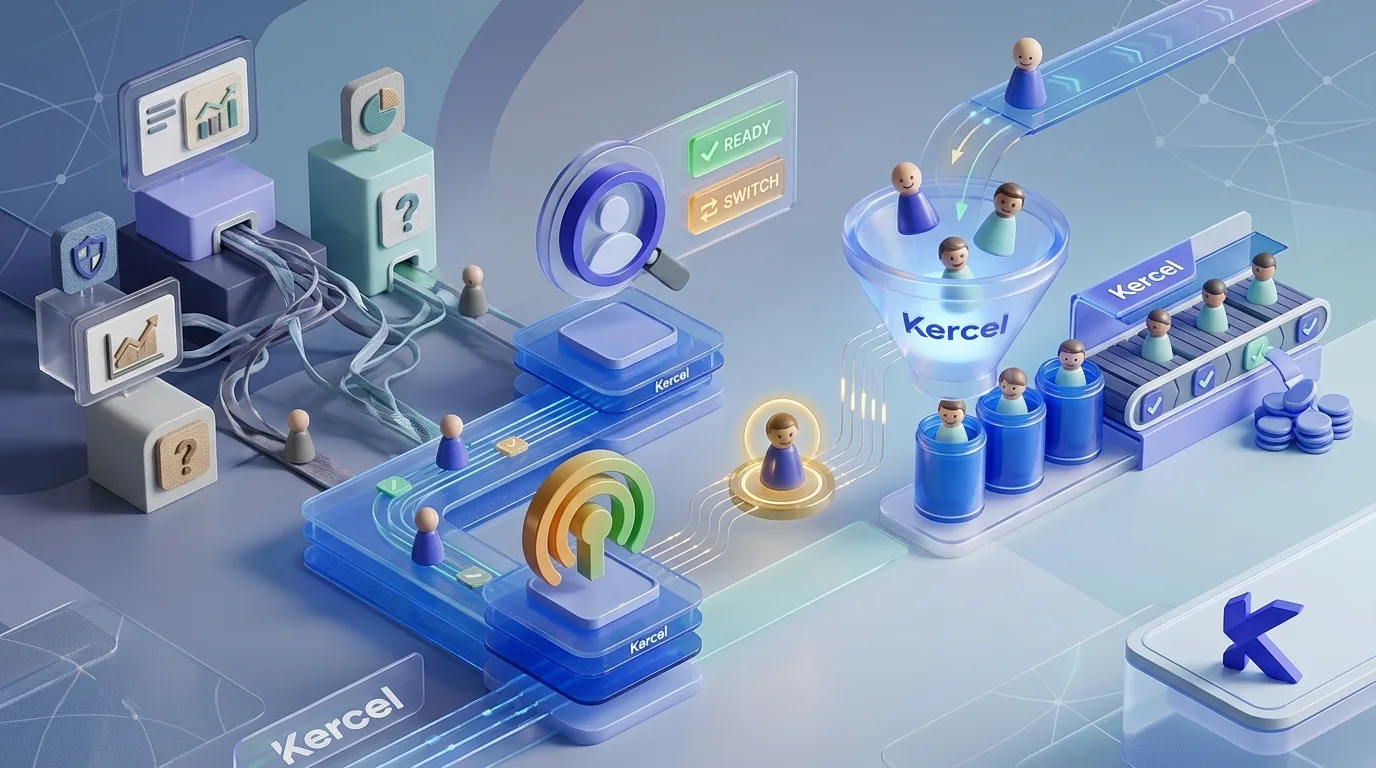
Rather than manually scouring Twitter, Reddit, and niche forums, our team uses Kercel to track these exact signals. You define your ICP, set the queries you care about (like “[Competitor] + alternative” or “migrating away from [Competitor]”), and the platform flags the conversations that matter. The lead arrives already warm, not after you spent a week trying to warm it up yourself.
Prioritizing the Leads That Move the Needle
For instance, a prospect who frequently complains about their current tool and actively seeks alternatives carries more weight than one who only mentions dissatisfaction once. The latter is prime.
A real pattern we see: a SaaS company tweets frustration about their billing provider, then a week later their CTO posts a public RFP in a specialized group. Together, those signals confirm dissatisfaction plus budget. When we built Kercel, we made it so you can select the specific signal types that matter most for your pipeline, from “evaluating alternatives” to “shows budget for this category.” The tool learns from your feedback over time, so the leads that land in your CRM get sharper every month.
Putting Switch-Signal Leads to Work in Your Pipeline
The moment a switch signal surfaces, your window to act is narrow. Your competitor’s SDR might see the same post if they’re paying attention. So you need a repeatable workflow: detect the signal, enrich the profile, and reach out with a message that references exactly what the prospect said.
A simple play: On Tuesday, a signal pops for someone asking, “Any good Typeform alternatives that don’t force you into their branding?” Your rep sends a single email within four hours. Subject line: “Saw your Typeform frustrations. Here’s a way to go fully white-label.” The message includes a 30-second Loom showing your unbranded form builder. That’s not a generic cold email. It’s a direct response to a stated need, and it converts far more often than a sequence built from a purchased list.
From there, feed those leads directly into your CRM. Track which signals produce the most meetings and which fizzle. Then loop that data back into your signal definitions. If “complaining about current tool” plus “needs white-label capability” delivers a 22% meeting rate while “asking for recommendations” alone sits at 8%, you know where to put your effort. The goal is to focus on leads that demonstrate clear intent to switch, such as those actively seeking alternatives or expressing dissatisfaction with their current solutions.
Lead generation strategies that ignore timing keep teams stuck in the same Monday morning routine. When your pipeline is built on prospects who are already halfway out the door from your competitor, everything changes. The conversations get faster. The close rates climb. And you stop counting emails and start counting deals.