

June 5, 2026 · Kercel team
Sales Prospecting: Targeting Ready-to-Switch Customers
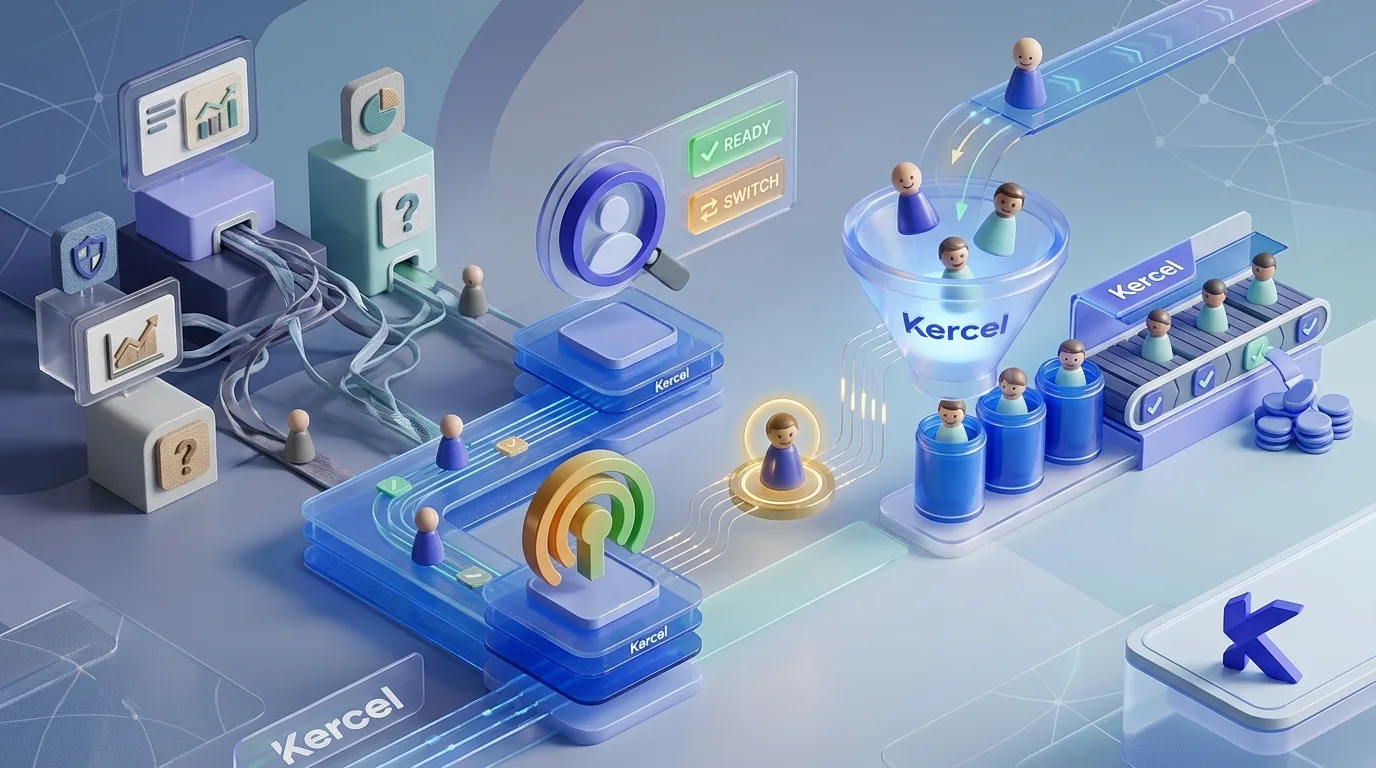
You spot a tweet from a competitor’s power user complaining about a missing integration. That’s not a random complaint. That’s a sales prospecting moment. Sales prospecting today focuses on identifying potential customers who are actively expressing dissatisfaction with their current providers, allowing sales teams to target those who are already considering a switch. Instead of casting a wide net and hoping for replies, you focus on prospects who are actively looking for a reason to switch.
What sales prospecting actually looks like now
Many sales teams continue to prioritize quantity over quality in their prospecting efforts, sending mass emails to large lists without personalizing their approach. The math works on paper, but the reality is different. Response rates hover in the low single digits. Reps burn hours on research that leads nowhere.
Now contrast that with a rep who spends the first 30 minutes of their day scanning for public signals. They find a marketing director on LinkedIn asking for recommendations to replace their current analytics tool. They see a CTO in a Slack community complaining about a competitor’s uptime. They notice a job posting for a role that implies a tooling upgrade is coming. Each of those signals is a warm door. The rep doesn’t need to convince anyone they have a problem. They just need to show up with a solution.
Why cold outreach keeps missing the mark
Cold outreach fails not due to email fatigue, but because it often targets prospects who are not currently considering a switch, resulting in low engagement rates. You’re reaching someone who isn’t thinking about switching, who hasn’t felt any pain recently, and who has no reason to engage. Even the best copy can’t manufacture urgency.
The alternative is to build your prospecting list around intent. When someone publicly complains about their current tool, evaluates alternatives, or asks their network for vendor recommendations, they’ve already done the hardest part of the buying process: they’ve admitted they need a change. Your job shifts from creating demand to capturing it.
How to find prospects who are ready to switch
Prospects leave valuable signals across various platforms, from social media complaints to job postings, but tracking these signals manually can be overwhelming for sales teams. You might catch a few on social media, a few in niche forums, a few in review sites. Manually tracking them across a dozen sources isn’t sustainable for a sales team that needs to hit weekly pipeline targets.
That’s where we built Kercel to step in. Instead of you hunting for signals, Kercel continuously scans public sources for the exact switch-readiness triggers you care about. You define your ideal customer profile, choose the sources and queries that matter, and pick the signals that indicate a prospect is ripe. A few examples:
- A founder publicly complaining about their current billing provider.
- A team lead asking for recommendations in a SaaS community.
- A company posting a job for a role that implies they’re outgrowing their current stack.
- An agency owner frustrated with a tool that lacks white-label capabilities.
Kercel surfaces those leads and feeds them directly into your pipeline. No manual searching, no guesswork. You get a short list of accounts where the timing is already on your side.
Putting sales prospecting on autopilot
The real shift happens when prospecting stops being a daily chore and becomes a background process. With Kercel, you set up your signal tracking once. The platform learns over time which signals convert best for your specific ICP and refines the suggestions accordingly. A fractional RevOps consultant managing five B2B clients can monitor switch signals across all of them from a single dashboard. A lead-gen agency can deliver evidence-backed prospect lists to every client without hiring more researchers.
By focusing on intent-driven prospecting, sales teams can create a pipeline that prioritizes leads who are already interested in switching, leading to more productive conversations. Reps spend less time prospecting and more time having conversations with people who already want to hear from them. If you’re ready to stop chasing cold leads and start responding to warm ones, take a look at how our features turn public signals into qualified opportunities.